
You’ve seen the photos, haven’t you? Sun-drenched riad rooftops overlooking the hazy maze of ancient medinas, impossibly serene figures holding warrior pose against the backdrop of endless Sahara dunes, vibrant blue skies meeting the vast, rhythmic Atlantic. When you travel Morocco, it’s hard not to notice how yoga retreats have woven themselves into the fabric of this country’s appeal. But pause for a second. Is it all just about capturing that perfect Instagram shot? Is yoga in Morocco simply the latest wellness trend piggybacking on exoticism?
Honestly, I don’t think it’s that simple. Having spent meaningful time navigating both the exhilarating chaos of Morocco’s imperial cities and the profound quiet corners of its diverse landscapes, I can tell you from the heart: there’s something genuinely deeper happening here. This Morocco travel guide isn’t your typical listicle of venues and prices. We’re exploring why Morocco resonates so strongly with seekers, what makes the yoga retreat experience here feel so distinct, and how you can find a path that genuinely speaks to you.
Why Visit Morocco for Yoga? The Pull Beyond the Picturesque
Morocco sits between Europe, Africa, and the Middle East, creating a potent confluence of geographical, cultural, and energetic forces. It’s more than year-round sunshine (though escaping colder climates is definitely a perk). This unique positioning makes Morocco tourism particularly appealing for yoga practitioners seeking transformation.
What exactly draws seekers, dedicated yogis, curious travelers, and those yearning for a reset to this particular corner of North Africa? It feels like a fertile environment where self-reflection, mindful practice, and profound personal shifts naturally occur.
The Landscape as Your Teacher: Practicing Amidst Powerful Contrasts
Morocco’s most striking feature is its staggering geographical diversity packed into a relatively manageable area. Practicing yoga within these dramatically varied landscapes isn’t just about enjoying different views, it offers profoundly different energies, different challenges, different lessons. It’s a tangible shift in perspective prompted by the very ground beneath your feet.
The Marrakech Medina Energy: Imagine rolling out your mat on the cool tile of a riad rooftop just as the first, soft call to prayer begins to echo across the awakening city. Below you, the ancient medina slowly stirs. You catch the distant, rhythmic clatter of vendors setting up their stalls, the faint, tantalizing scent of spices beginning to mingle with the crisp morning air.
Practicing yoga here, in the vibrant heart of Marrakech, isn’t about escaping the world. It’s a direct, powerful lesson in finding your calm center within its undeniable pulse. A Marrakech yoga retreat gently forces you to confront the dynamic interplay between inner stillness and outer chaos. Can you maintain your focus amidst the symphony of sounds? Can you find the quiet rhythm of your own breath when life is buzzing all around you? Discover the Red City’s Secrets
You’ll find stunning retreats tucked away like hidden jewels within the protective walls of the medina itself, offering surprising serenity just steps from the Djemaa el-Fna square. Others nestle in the calmer Palmeraie (palm grove), providing easier access to the city’s vibrant heart while offering a more expansive, peaceful sanctuary.
Sahara’s Infinite Stillness: Then there’s the desert, the immense, awe-inspiring Sahara. Venturing into this vast landscape through a Morocco itinerary centered on yoga creates an entirely different experience. Here, the practice shifts from managing chaos to sitting with profound silence.
In the Sahara, you’re confronted with space. Endless, humbling space. The kind that makes your everyday worries feel beautifully small. Practicing sun salutations as actual sun breaks over dunes older than memory, feeling the cool sand beneath your mat gradually warm, watching shadows shift and play across infinite ripples of ochre and gold. This isn’t just yoga, it’s communion with something ancient and timeless.
Desert yoga retreats near Merzouga or in the dramatic Erg Chebbi dunes offer this unique perspective. The silence isn’t empty, it’s full. Full of stars at night (more than you’ve ever seen), full of the subtle whisper of wind shaping sand, full of your own thoughts finally given space to settle. What’s the Best Time to Visit Merzouga
Atlas Mountains: Grounded Elevation
The High Atlas Mountains provide yet another dimension. Here, you’re grounded but elevated. Berber villages cling to terraced slopes, ancient kasbahs stand sentinel over valleys, and the air carries a crisp clarity that makes every breath feel intentional.
Mountain yoga retreats often incorporate hiking, connecting movement with landscape in a way that feels deeply organic. You might practice overlooking valleys where women still weave rugs using techniques passed down through countless generations. You might meditate to the sound of water rushing through mountain streams that have carved these peaks for millennia.
The Atlas offers a particular kind of grounding. You’re literally closer to the sky, yet somehow more connected to earth. It’s a beautiful paradox, and one that many practitioners find mirrors their own journey toward balance.
Coastal Calm: Atlantic Rhythm
Along Morocco’s Atlantic coast, particularly around Essaouira or Taghazout, yoga takes on the rhythm of waves. These coastal retreats blend practice with surfing culture, creating a unique fusion of flow.
The ocean provides its own meditation. Constant movement, constant change, yet somehow always itself. Practicing yoga to the sound of waves offers a different kind of anchor than mountain silence or desert stillness. It’s movement within stillness, change within constancy. Is Essaouira Worth Visiting
What Makes Morocco Yoga Retreats Unique?
Morocco yoga retreats stand apart because they layer yogic philosophy with rich Islamic and Berber traditions, creating something genuinely distinct. When you visit Morocco for a retreat, you’re not just practicing asana in an exotic location. You’re entering a culture with its own deep wells of spiritual practice.
Cultural Immersion Beyond the Mat
Many retreats thoughtfully integrate Moroccan culture into the experience. This might include:
- Traditional hammam (steam bath) ceremonies as a mindful cleansing practice
- Moroccan tea ceremonies that mirror the intentionality of tea meditation
- Visits to local artisan cooperatives, particularly women’s weaving collectives in the Atlas
- Cooking classes focused on the meditative aspects of Moroccan food preparation
- Storytelling sessions with local elders or musicians
The key is authenticity. The best retreats don’t treat Moroccan culture as exotic decoration but as a living tradition worthy of genuine respect and engagement. Cultural Fusion with Integrity
Architecture and Space
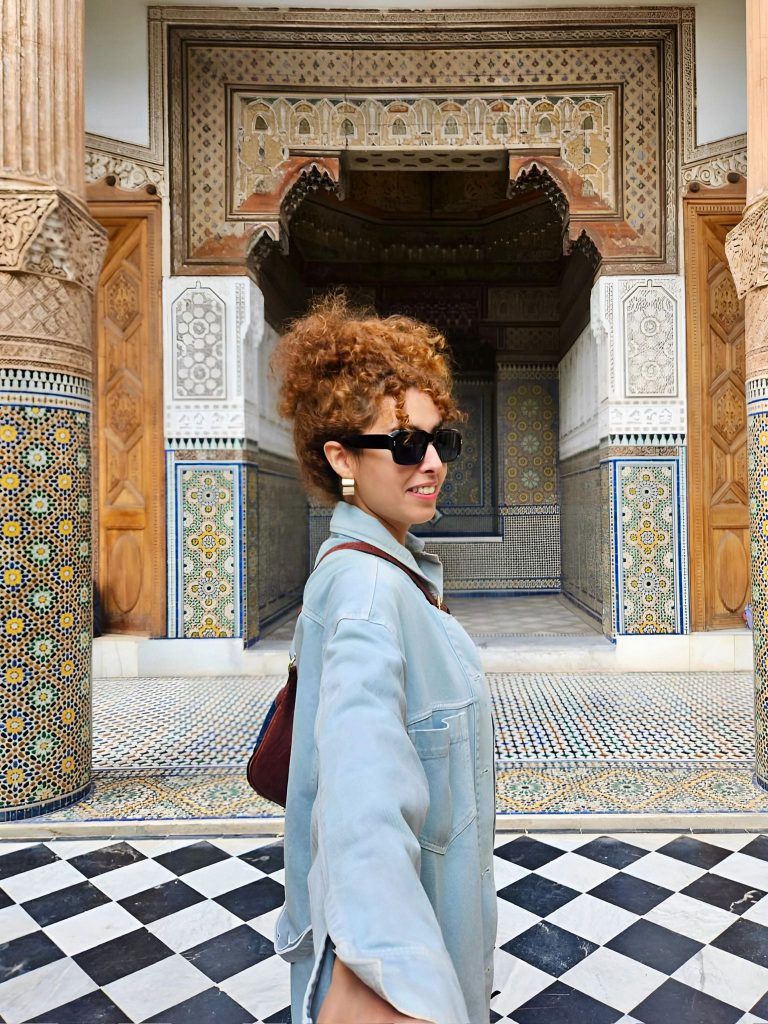
Where you practice matters. Moroccan architecture, with its interior courtyards, rooftop terraces, and intricate tile work (zellige), creates spaces that naturally encourage inward focus while remaining open to sky and light.
Many riads and kasbahs converted into retreat centers maintain their traditional architecture. You might practice in a centuries-old courtyard with a fountain at its center, the gentle sound of water providing natural white noise. Or on a rooftop with 360-degree views of terracotta rooftops, minarets, and distant mountains.
These spaces weren’t designed for yoga, yet they often feel perfectly suited to it. There’s a geometry to traditional Moroccan architecture, a balance of light and shadow, openness and enclosure, that mirrors yogic principles of balance.
How to Choose Your Morocco Yoga Retreat
Choosing the right retreat depends on your experience level, preferred landscape, and what you hope to gain beyond physical practice. The best time to visit Morocco for yoga varies by region, but spring (March-May) and fall (September-November) offer ideal temperatures across most locations.
Questions to Ask Before Booking
What’s the teaching lineage and style? Vinyasa, Hatha, Yin, Kundalini? Different styles serve different needs. If you’re seeking gentle restoration, a vigorous Ashtanga retreat might not align. If you want to deepen your practice, a beginner-focused retreat might feel too basic.
What’s the group size? Smaller groups (8-12 people) typically offer more personalized attention and deeper community. Larger retreats can feel more anonymous but might offer more diverse programming.
How is Moroccan culture integrated? Is it thoughtful and authentic, or does it feel tacked on? Do retreat leaders work with local communities respectfully? Are Moroccan facilitators involved, or is it entirely run by foreigners?
What’s included? Accommodations, meals, excursions, airport transfers? Hidden costs can add up quickly. Be clear on what’s covered.
What’s the food philosophy? Many retreats offer vegetarian or vegan meals inspired by Moroccan cuisine. If you have dietary restrictions, confirm they can be accommodated genuinely (not just with side salads).
Matching Landscape to Intention
Choose your location based on what you’re seeking:
- Marrakech: For those who want to balance practice with cultural exploration. Best for travelers who get energy from cities and want easy access to souks, museums, gardens.
- Sahara: For deep introspection and digital detox. Best for those ready to sit with silence and simplicity.
- Atlas Mountains: For combining yoga with hiking and connection to Berber culture. Best for those who find grounding in nature and physical challenge.
- Atlantic Coast: For pairing yoga with surfing or beach time. Best for those who find meditation in movement and ocean rhythms.
Best Time to Visit Morocco for Yoga Retreats
Spring (March-May) and autumn (September-November) are ideal for most Morocco yoga retreats, offering comfortable temperatures and fewer crowds. However, each season and region has its own character.
Spring (March-May): Wildflowers bloom in the Atlas, temperatures are warm but not scorching, and the landscape is lush from winter rains. This is peak season for many retreats, so book early.
Summer (June-August): Coastal retreats shine during summer months. The Atlantic keeps temperatures moderate while inland cities like Marrakech can reach 40°C (104°F). If you’re considering Marrakech in summer, expect early morning and evening practices with midday siesta.
Autumn (September-November): Perhaps the most balanced season. Temperatures cool from summer highs, harvest season brings incredible produce to retreat tables, and the light takes on a golden quality photographers dream about.
Winter (December-February): Don’t dismiss winter entirely. Coastal areas remain mild, and if you’re heading to the Sahara, winter actually offers the most comfortable temperatures for desert practice. The Atlas gets snow, which transforms the landscape into something ethereal. Just pack layers. Flights to Morocco and Best Times to Visit
Cultural Considerations for Yoga Practitioners
Morocco is a predominantly Muslim country with its own cultural norms. Respectful engagement enhances your experience and supports positive relationships between retreat culture and local communities.
Dress Codes and Modesty
Within retreat centers, typical yoga attire is generally fine. However, when venturing into towns, markets, or rural areas, modest dress is respectful and practical. This means:
- Covering shoulders and knees
- Loose-fitting clothing rather than tight or revealing cuts
- Bringing a scarf that can cover your head when visiting religious sites
This isn’t about suppression, it’s about mutual respect. Many Moroccan women navigate their own complex relationships with dress and faith. As visitors, we honor that complexity by not assuming our way is universal.
Ramadan Awareness
If your retreat coincides with Ramadan (dates shift yearly based on the lunar calendar), be aware that many Moroccans are fasting from sunrise to sunset. This means:
- Refraining from eating, drinking, or smoking in public during daylight hours
- Expecting some shops and restaurants to be closed during the day
- Experiencing the beautiful energy of iftar (fast-breaking) meals at sunset
Some retreats embrace Ramadan, offering optional fasting or adjusting meal times to align with local rhythms. Others may modify their schedules. Clarify this when booking if traveling during this period. Ramadan FAQ
What to Pack for Your Morocco Yoga Retreat
Most retreats provide yoga mats, blocks, and bolsters, but confirm beforehand. Beyond the basics:
- Layers: Even in warm months, mornings and evenings can be cool, especially in mountains or desert
- Sun protection: Hat, sunglasses, reef-safe sunscreen (Morocco’s sun is strong)
- Modest clothing: For cultural excursions outside the retreat center
- Comfortable walking shoes: For medina exploration or mountain hikes
- Journal and pens: For processing experiences
- Reusable water bottle: Many retreats have filtered water stations
- Small daypack: For excursions
- Cash (Moroccan Dirhams): For tips, souvenirs, or purchases outside the retreat
Beyond the Retreat: Extending Your Morocco Itinerary
Many travelers bookend their retreat with additional exploration. Morocco’s compact size makes it feasible to experience multiple landscapes within a week or two.
Before or after a Marrakech retreat: Consider adding a few days in the blue city of Chefchaouen, the coastal calm of Essaouira, or the imperial grandeur of Fes. First Time in Morocco? Plan a Great 6-Day Trip
After a Sahara retreat: The journey itself is part of the experience. Many travelers wind through the Dades Valley, visiting ancient kasbahs like Aït Benhaddou (a UNESCO site you’ll recognize from countless films).
After an Atlas retreat: Descend into the bustling energy of Marrakech or head west to the Atlantic coast for a change of pace.
The Real Question: Is Morocco Right for Your Yoga Journey?
Here’s what I’ve learned through my own time here and conversations with countless travelers and practitioners: Morocco won’t give you easy answers. It’s not a place that coddles. The call to prayer might wake you before dawn. The heat might challenge you. The chaos of medinas might overwhelm you. The silence of the desert might unsettle you.
But if you’re willing to meet Morocco on its own terms, if you can hold space for complexity and contradiction, if you can practice yoga not just on your mat but in your interactions, your observations, your willingness to be changed by a place rather than simply visiting it, then yes. Morocco might be exactly where your practice needs to go next.
Because ultimately, isn’t that what yoga is really about? Not perfect poses against perfect backdrops, but the messy, beautiful work of showing up, staying present, and allowing transformation to happen in its own time, in its own way.
When you travel Morocco with this openness, every experience becomes part of the practice. Every interaction, every landscape, every moment of discomfort or delight. The retreat might be seven days, but the journey continues long after you roll up your mat and head home.

1 thought on “Morocco Yoga Retreats: Your Travel Guide to Mindful Journeys”
Comments are closed.