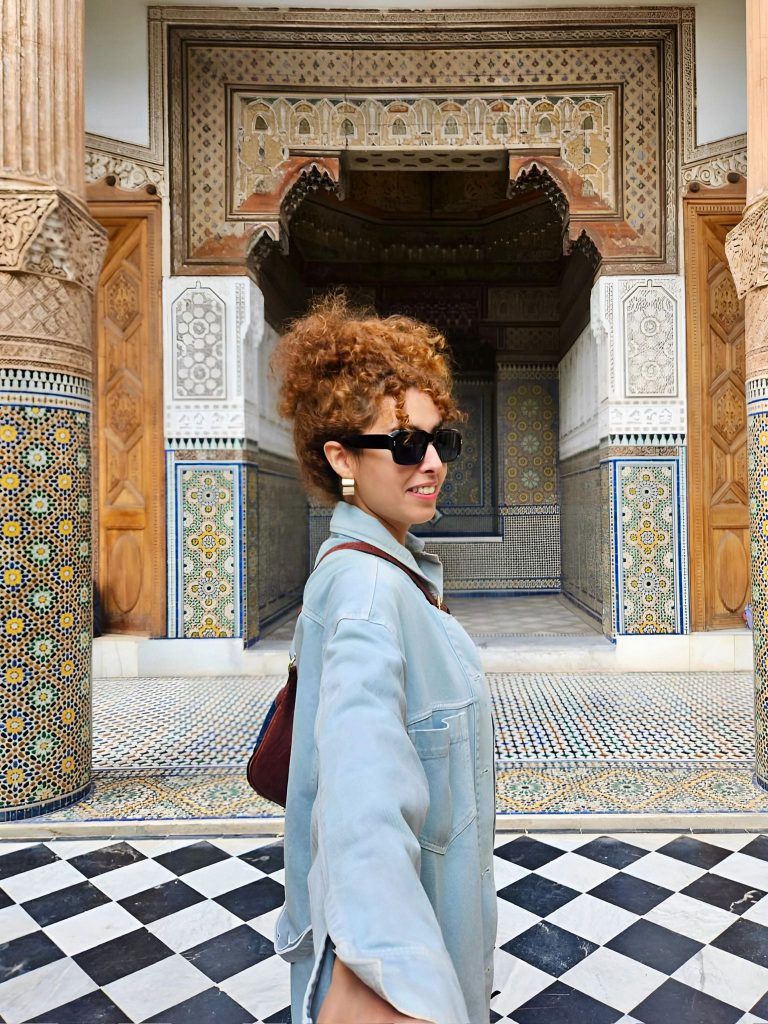
The scent hits you first: orange blossom water, mint steeped in silver, bread warming in clay. Then your eyes adjust to the soft lantern glow, and you see it. A landscape of textiles spreading across the floor, cushions piled like small thrones, and at the center, a gleaming brass tray holding tomorrow’s stories. This is Moroccan heritage at its most generous. This is diffa, the art of hosting as blessing.
Creating this experience in your home means honoring one of humanity’s great entertaining traditions, where every element from handmade textiles to hand-washing rituals serves a deeper purpose than decoration.
What Makes Moroccan Hospitality Different?
At the heart of Moroccan culture lies d’yafa, a concept that goes far deeper than simply welcoming guests. It’s a sacred obligation. According to Dr. Fatima Sadiqi, professor at Harvard University’s Department of African Studies, “Traditional Moroccan hospitality represents a sacred obligation, where guests are viewed as blessings rather than burdens.” This philosophy infuses every aspect of how we gather.
Where Western dining maintains clear boundaries between host and guest, Moroccan gatherings intentionally blur these lines. Communal serving styles, shared plates, interactive food experiences. The Moroccan National Tourist Office describes authentic hosting as an attempt to “temporarily transform guests into family members through shared sensory experiences.” You’re not serving people. You’re expanding your circle.
How Do You Create an Authentic Moroccan Dining Space?
Traditional Moroccan entertaining happens at floor level, and there’s wisdom in this. Floor dining creates an intimacy that conventional tables can’t match. Research from the Museum of Anthropology at Rabat shows this practice dates back centuries, designed to equalize participants while deepening connection. When everyone sits on the same level, hierarchy dissolves. What remains is presence.
The Floor-Level Setup
To recreate this in your space, start with a low, round table. A brass siniya tray or wooden tbla works perfectly, set atop a carpet. Surround it with firm, flat cushions, roughly 24 inches square. Soft pillows won’t work here; you need structure. Allow about 24 inches of space per guest around the perimeter, with cushions positioned slightly back from the table edge so reaching feels natural.
The Moroccan Ministry of Crafts recommends placing additional cushions against walls or furniture to create back support for longer gatherings. Comfort isn’t optional. It’s part of the generosity.
Why Textiles Matter: The Foundation Layer
Moroccan textiles aren’t decoration. They’re architecture. According to textile researcher Meryem El Alaoui of the Rabat School of Traditional Arts, “The layering of textiles serves both practical and symbolic purposes in Moroccan hospitality, with specific rugs designated for receiving honored guests.” The carpets you choose communicate value, warmth, welcome.
Start with a flat-woven kilim or Zanafi rug as your base layer. These Berber traditions create durability and visual grounding. Layer a plush Beni Ourain or Middle Atlas rug atop for warmth and comfort. Position floor cushions covered in silk or embroidered cotton as seating. Keep additional textiles like throws or wedding blankets nearby for cooler evenings.
Bert Flint of the Tiskiwin Museum in Marrakech notes something beautiful: authentic dining textiles feature patterns that flow outward from the center, “symbolically embracing guests.” Even the geometry holds intention.
What Goes on a Moroccan Table?
Traditional Moroccan dining uses specific vessels that do more than hold food. They enhance flavor, create ritual, facilitate sharing. This is Moroccan craftsmanship at work, form serving function serving meaning.
Essential Serving Vessels
Tagines: Those iconic conical earthenware vessels double as cooking and serving dishes. Research in the Journal of North African Studies confirms that unglazed clay tagines improve flavor through slow moisture evaporation and even heat distribution. The Moroccan Culinary Arts Institute recommends one tagine per 3-4 guests.
Gsaa: Large, shallow communal serving dishes, typically wooden or ceramic, designed for sharing from a central point.
Tea Service: An ornate silver or brass teapot, small glass cups, and serving tray. Not negotiable. Tea is the thread that weaves the entire experience together.
How to Set a Traditional Moroccan Table
Forget individual place settings. Moroccan culture favors communal access and shared experience over personal territory. Use a central tablecloth (embroidered cotton or silk) that covers just the table surface. Provide shared serving utensils rather than individual flatware. Present hand-washing facilities before and after eating: a brass tbaga basin and abriq pitcher, often scented with orange blossom or rose water.
Small side plates work for personal use, typically ceramic with traditional patterns. Chef Mourad Lahlou, author of “Mourad: New Moroccan,” explains that authentic table settings “prioritize function and communal access while maintaining visual harmony through consistent materials and colors.” Everything coordinates, but nothing matches too perfectly. There’s ease in the arrangement.
What About Atmosphere: Light, Scent, and Sound?
Moroccan entertaining engages every sense, not just taste. Research from the Fez Festival of World Sacred Music shows that traditional gatherings carefully orchestrate lighting, scent, and sound to create full immersion.
Lighting: Keep it low and warm. Lanterns (fanous) and candles create flattering, intimate light that softens faces and deepens conversations.
Scent: Orange blossom water sprinkled on guests’ hands before dining. Incense in the background. The smell of bread, of saffron, of mint. Scent anchors memory more powerfully than any other sense.
Sound: Background music using traditional instruments like oud or qanun. Nothing loud. Just a sonic texture that fills silence without demanding attention.
Dr. Rachid Bennani-Smires of the Royal Institute of Amazigh Culture emphasizes that these elements aren’t decoration but “crucial components of hospitality that signal respect, abundance, and cultural continuity.” When you light a lantern or sprinkle rose water, you’re not setting a mood. You’re continuing a lineage.
Bringing It Together: Creating Your Own Diffa
You don’t need to be Moroccan to practice Moroccan heritage in hospitality. You need to understand that entertaining isn’t performance. It’s offering. The rugs you lay, the tagines you fill, the tea you pour, these aren’t props. They’re the physical vocabulary of care.
Start small. A low table, a beautiful rug, some firm cushions. Work with Moroccan artisans when you can, supporting the hands that keep these traditions alive. Let your guests remove their shoes. Serve from shared dishes. Pour the tea high so it foams.
The magic of Moroccan entertaining isn’t in perfect execution. It’s in the intention to transform guests into family, to flatten hierarchy, to say with textiles and vessels and scents: you are welcome here. You are safe here. You are home.