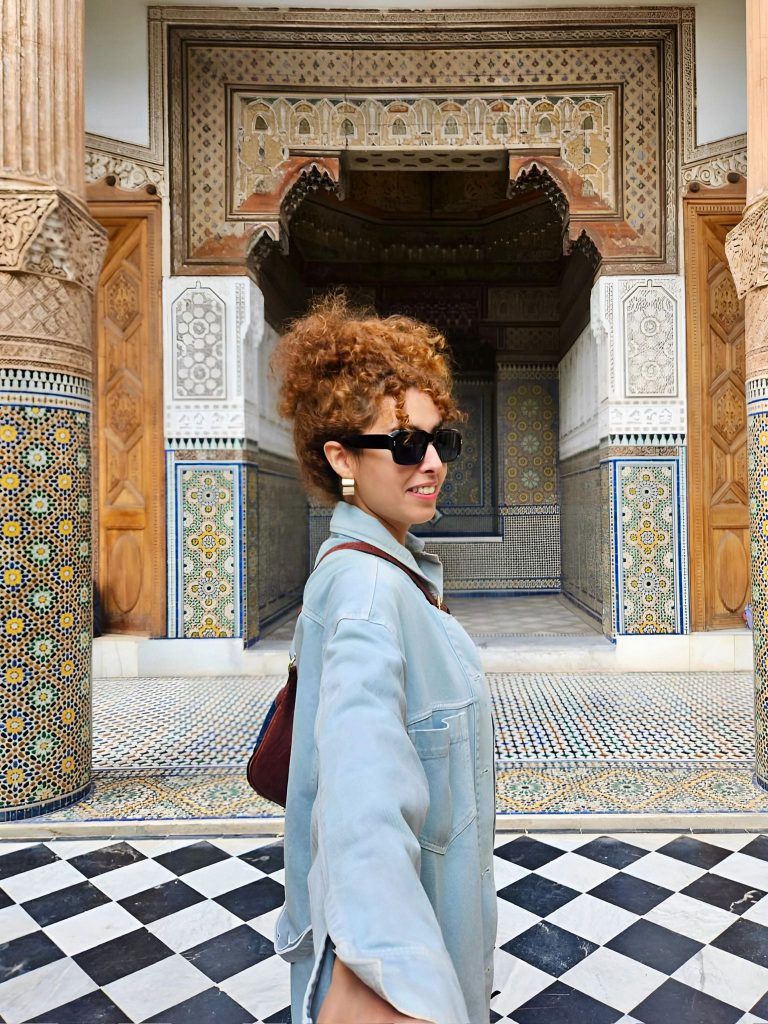
Moroccan women have emerged as trailblazers in scientific research, overcoming systemic barriers to contribute groundbreaking work across disciplines such as artificial intelligence, astronomy, particle physics, and planetary sciences. Their achievements not only advance global knowledge but also reshape national policies. Additionally, they inspire future generations.

Rooted in Morocco’s rich heritage of storytelling and craftsmanship, these women reflect the spirit of resilience and innovation that has defined Moroccan culture for centuries. From the intricate weaving of rugs to the exploration of the cosmos, the legacy of Moroccan women continues to inspire local and global communities.
Advancing Artificial Intelligence and Robotics
Prof. Hajar Mousannif: Architect of Morocco’s First Humanoid Robot
Hajar Mousannif, a professor at Cadi Ayyad University, spearheaded the creation of Shama, Morocco’s first humanoid robot, in 2020. Her work in artificial intelligence (AI) earned her the WomanTech Global AI Inclusion Award. This award recognized her efforts to bridge gender gaps in STEM. Beyond robotics, Mousannif developed algorithms to predict road accidents and model COVID-19 spread. These tools are now integrated into Morocco’s public health and transportation strategies. Her collaborations with international entities like FotaHub, which invested $100,000 to enhance Shama, underscore the global relevance of her innovations.

Revolutionizing Astronomy and Astrophysics
Dr. Merieme Chadid: Antarctica’s Stellar Pioneer
Merieme Chadid, the first African and Arab woman to install an astronomical observatory in Antarctica (2005), transformed polar research. Her work at Dome C’s Concordia Station advanced understanding of stellar pulsations, critical for modeling star evolution. Earlier, she contributed to Chile’s Very Large Telescope (VLT) in the Atacama Desert, optimizing its capacity to observe distant galaxies. Forbes Magazine listed her among the world’s “30 most fascinating workers,” cementing her status as a global scientific icon. Learn more about her work through the World Economic Forum.
Preserving Celestial Heritage: Meteoritics and Planetary Science
Prof. Hasnaa Chennaoui: Guardian of Morocco’s Meteorites
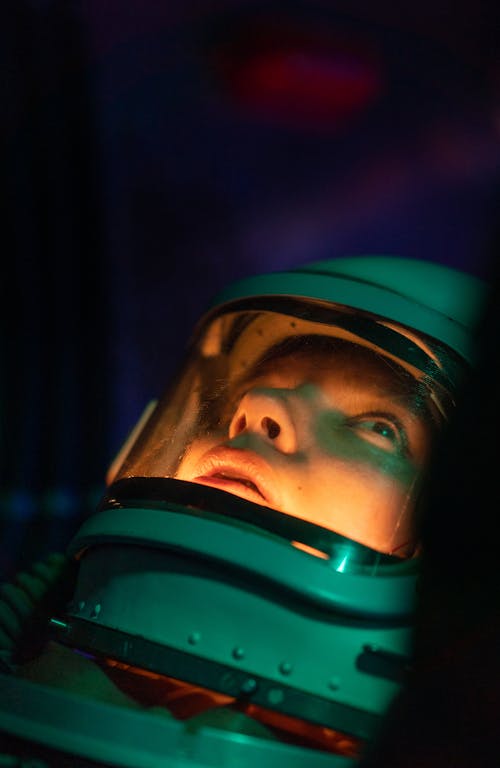
As Morocco’s first female meteoriticist, Hasnaa Chennaoui revolutionized the nation’s approach to celestial heritage. She lobbied for the 2021 decree regulating meteorite exports, preventing the loss of over 1,200 specimens to foreign markets. Her research on Martian meteorites informed NASA’s Perseverance rover missions, published in Nature (2025). Chennaoui also founded the ATTARIK Foundation, which curates a public meteorite exhibit in Casablanca, educating 18,000+ visitors on planetary science. An asteroid, 299020 Chennaoui, now bears her name, honoring her advocacy for Morocco’s cosmic legacy.
Particle Physics and Healthcare Innovation
Prof. Rajaa Cherkaoui El Moursli: Higgs Boson Collaborator
Rajaa Cherkaoui El Moursli played a pivotal role in the ATLAS experiment at CERN, contributing to the 2012 discovery of the Higgs Boson. Her work on the electromagnetic calorimeter earned her the 2015 L’Oréal-UNESCO Award. This award recognized her as a global leader in physics. Domestically, she established Morocco’s first master’s program in medical physics, elevating healthcare standards. She achieved this by training specialists in radiation therapy and diagnostic imaging.
Prof. Farida Fassi: Elevating Moroccan Physics Globally
Farida Fassi, noted in Research.com’s 2023 global rankings, advanced high-energy physics through her work on the Compact Muon Solenoid (CMS) experiment. Her research on proton collisions at CERN has implications for quantum computing and material science. Her work positions Morocco as a participant in cutting-edge physics.
Overcoming Challenges and Shaping Futures
Structural Barriers
Despite their achievements, Moroccan women scientists confront systemic obstacles:
- Resource Limitations: Chennaoui highlights the scarcity of advanced laboratory equipment and academic positions, hindering research scalability.
- Gender Disparities: While women constitute 50% of STEM students in MENA, only 19.5% of Moroccan primary schools teach Tamazight. This limitation affects rural girls’ access to scientific careers.
Mentorship and Advocacy
These pioneers actively nurture future scientists:
- Chennaoui mentors 10+ PhD students in meteoritics, ensuring continuity in planetary studies.
- Mousannif’s AI master’s program at Cadi Ayyad University has a 65% female enrollment, challenging gender norms in tech.
Conclusion: A Legacy of Resilience and Global Impact
Moroccan women scientists have redefined their nation’s role on the global stage, from Antarctic observatories to particle accelerators. Their work addresses both universal scientific questions and local challenges, such as healthcare access and cultural preservation.
Rooted in a culture that values craftsmanship, storytelling, and innovation, these women are not just scientists—they are cultural ambassadors, carrying Morocco’s legacy into the future. As Merieme Chadid asserts, “Science is a universal language—one that Morocco speaks with growing fluency.”
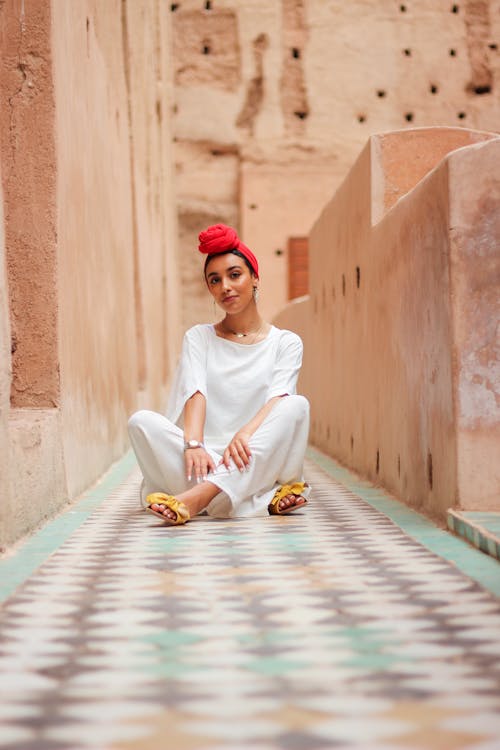
By investing in education and infrastructure, Morocco can amplify these contributions, ensuring its women remain at the forefront of global innovation. To learn more about how Moroccan women empower their communities through craftsmanship, explore our blog on Women Empowerment: The Heart of Moroccan Craftsmanship.
Let’s celebrate and support Moroccan women in STEM by sharing their stories and investing in initiatives that empower the next generation of scientists. Explore how you can contribute to their success through organizations like the ATTARIK Foundation or by advocating for gender equality in STEM fields.
Conclusion
Exploring Morocco’s rich culture and heritage offers endless inspiration, from its vibrant traditions to its breathtaking landscapes. Whether you’re delving into What Defines the Moroccan Ethnic Identity, seeking adventure with The Ultimate Guide to Surfing in Morocco’s Best Waves, or uncovering the symbolism behind Understanding the Morocco Flag Colors and Symbols, each aspect tells a unique story.
At She&Elle of Morocco, we celebrate these stories through our handcrafted rugs and curated content. Visit our homepage to discover more about our journey, or learn about our mission and values on our About Us page.
Let these stories of Morocco inspire your home, your travels, and your lifestyle.