
10 Living Treasures of Moroccan Heritage: From Berber Artisans to Ancient Medinas
Picture this: you’re standing at the edge of a crowded souk, the air thick with cumin and cedar smoke, watching an elderly woman’s hands move across a loom with practiced rhythm. This is Moroccan heritage, not locked behind museum glass, but alive in the hands of artisans, echoing through medina alleyways, woven into the very fabric of daily life.
I always tell people, Morocco sits at the crossroads of Africa and Europe. We’re a place where cultural stories have been written, rewritten, and layered over thousands of years. Our heritage is a stunning blend of Berber, Arab, African, and European influences. This mix gives Moroccan culture its distinctive soul.
Let me share some of the most captivating pieces of this heritage with you. They show the country’s astonishing cultural depth.
Morocco’s UNESCO World Heritage Sites: More Than Egypt
Here’s something that surprises most visitors: Morocco has more UNESCO World Heritage sites than any other African nation. We have more than Egypt, famous for its pyramids and pharaohs. Nine designated sites dot our landscape, with thirteen more on the Tentative List. This recognition shows Morocco’s significance on the global cultural stage.
What amazes me is how much history exists in a relatively compact area. You can trace millennia of Moroccan heritage without crossing an ocean.
These sites tell Morocco’s layered story. Walk through the Roman ruins of Volubilis, dating back to the 3rd century BC. You’ll see remarkably intact mosaics, colonnades, and the triple-arched Tingis gate. These aren’t just old stones. They’re windows into civilizations that shaped our roots.
Then explore the medieval medinas of Fez and Marrakech, bursting with vibrant Islamic and Arab influences. [INTERNAL_LINK: Navigate the ancient medinas of Morocco → Guide to Moroccan Medinas/Traditional Moroccan Markets]
And Ait Benhaddou? Those red mudbrick fortifications are pre-Saharan architecture at its most dramatic. So visually striking, they’ve appeared in Gladiator and Game of Thrones. When you stand before those earthen walls, you’re not looking at a movie set. You’re witnessing Berber traditions in architectural form, techniques passed down through generations of Moroccan artisans.
This concentration of UNESCO sites demonstrates Morocco’s commitment to preserving diverse cultural heritage. We’re not keeping it to ourselves. We’re making it accessible for the world to experience.
Linguistic Diversity: Where Four Languages Dance Together
One aspect of Moroccan culture that fascinates me is our linguistic richness. Morocco is a living tower of Babel, where multiple languages coexist in daily conversation.
The nation officially recognizes Arabic and Amazigh (Berber). Amazigh gained constitutional status in 2011, a monumental step in preserving indigenous heritage. The Royal Institute of Amazigh Culture developed Standard Moroccan Amazigh, combining elements from Tashelhit, Central Atlas Tamazight, and Tarifit. It’s written in the distinctive Tifinagh script, with symbols that look like ancient secrets carved in stone.
This effort shows Morocco’s dedication to protecting cultural roots that stretch back millennia.
But language layers don’t stop there. Moroccan Arabic, or Darija, is its own beast. Quite different from Modern Standard Arabic, Darija blends Berber, French, Spanish, and other influences into something uniquely ours. These differences can make Darija difficult for speakers of other Arabic dialects to understand. However, Moroccans usually grasp other Arabic varieties without trouble.
French plays a major role in education, business, and government. In northern regions, you’ll hear Spanish echoing from our shared history. Many Moroccans switch between four or more languages daily, moving from Arabic to French to Amazigh without breaking stride.
This multilingual environment is Moroccan heritage in action, proof of our position as cultural bridge between continents.
The Enigmatic Beauty of Moroccan Architecture
Moroccan architecture tells stories in geometry and light. It blends Amazigh, pre-Islamic Spanish, and Middle Eastern traditions into what we call “Hispano-Maghrebi” or “Moorish” style. This architectural language evolved over centuries into something cohesive and unmistakably Moroccan.
You’ll recognize it immediately: the horseshoe arch in its many forms, from simple curves to elaborate polylobed and lambrequin variations. Then there’s muqarnas, honeycomb vaulting that became prominent under the Almoravids. This intricate geometric feature adorns mosques and palaces throughout Morocco, a testament to Moroccan craftsmanship. [INTERNAL_LINK: The geometry of Moroccan design → Moroccan Architectural Elements/Islamic Geometric Patterns]
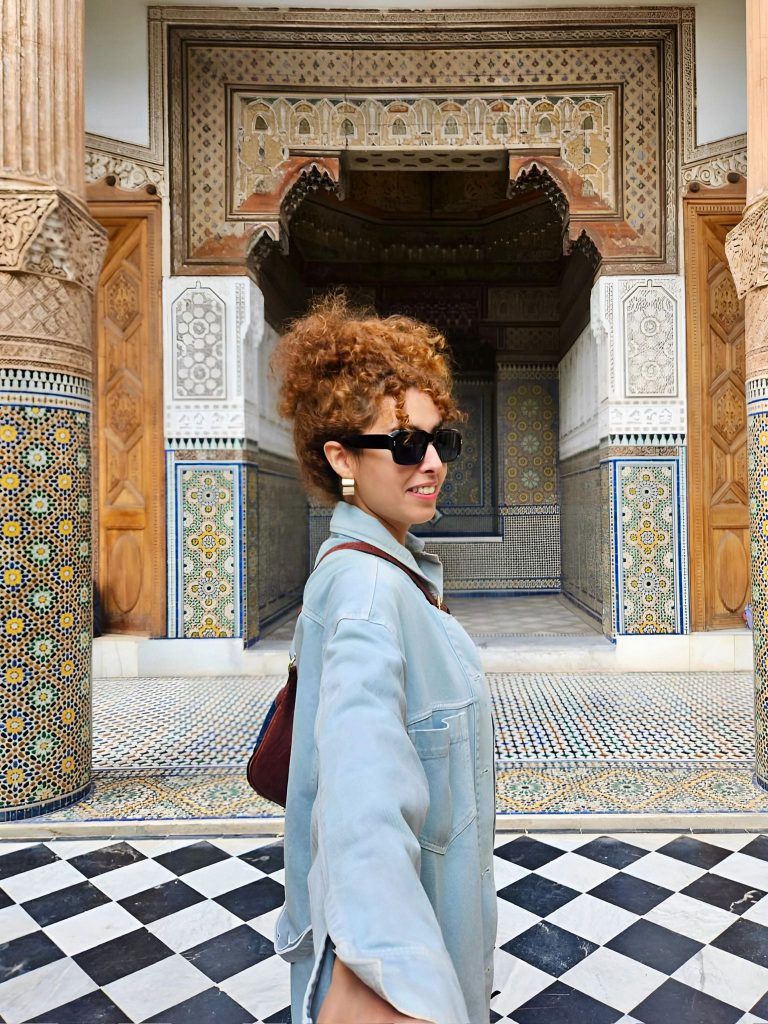
And zellige mosaics? These aren’t machine-cut tiles. Each piece is hand-shaped by Moroccan artisans, then arranged into hypnotic geometric patterns. You’ll find them on homes, mosques, and public spaces. They represent generations of Islamic craftsmanship, skills passed from master to apprentice.
But Moroccan architecture goes deeper than surface beauty. You’ll see carved plaster (gypsum work so delicate it looks like lace), detailed woodwork, and ornate calligraphy. Traditional structures honor privacy through inward-facing designs centered around courtyards.
The riad exemplifies this philosophy. Built around a central garden with a fountain, riads create serene microclimates. Step inside from a bustling medina, and suddenly you’re in an oasis of calm. Water trickles, light filters through carved screens, and the outside world fades.
This is architecture as refuge, as poetry in three dimensions.
Moroccan Cuisine: Centuries Simmering in a Clay Pot
Moroccan cuisine is world-renowned for good reason. It’s been shaped over centuries by interactions with diverse cultures, creating a gastronomic heritage that combines Berber roots with Arab, Moorish, French, and Mediterranean influences. The result? Dishes with incredible depth and complexity.
Think of the tagine, Morocco’s most iconic dish. Named after the conical clay pot it’s cooked in, the tagine is ingeniously designed to conserve water and fuel. Its lid traps steam, returning moisture to the dish. This cooking method, perfected by Berber traditions, creates incredibly tender and aromatic meals.
You’ll find countless regional variations. Chicken Tagine with Herbs and Harissa Olives. Sweet-savory Beef Tagine with Prunes. Each one tells a story of place and season. [INTERNAL_LINK: Traditional Moroccan recipes → Moroccan Cooking Guide/Tagine Recipes]
Couscous holds even deeper cultural significance. It’s recognized as Intangible Cultural Heritage of Humanity. Made from hand-rolled semolina grains, traditional couscous preparation is an art form passed down through generations of women. Friday couscous is more than a meal. It’s ritual, family gathering, and cultural transmission all rolled into one steaming platter.
When you taste authentic Moroccan culture through its cuisine, you’re not just eating. You’re experiencing history.

you’re amazing!